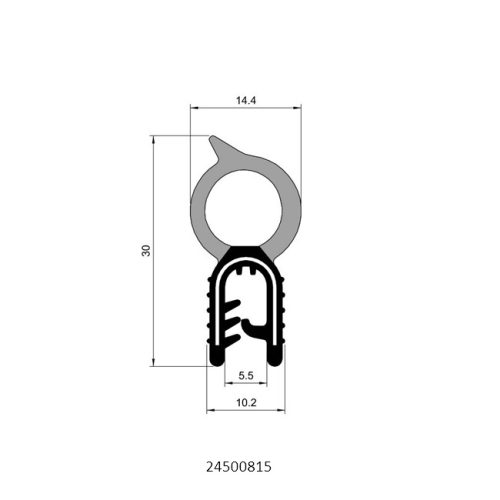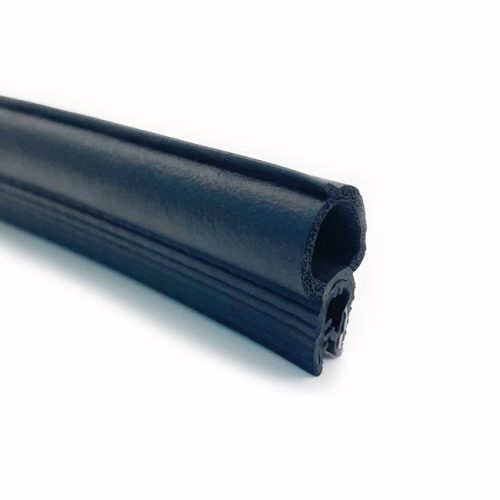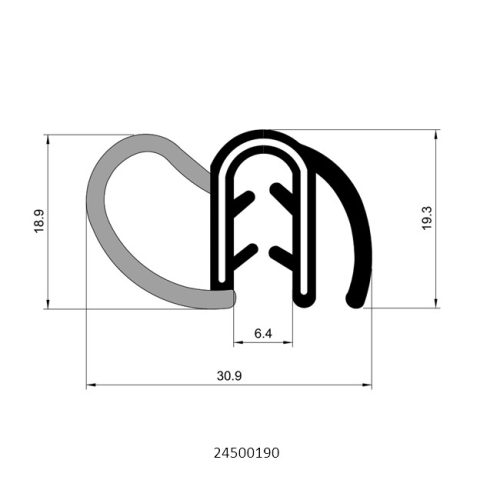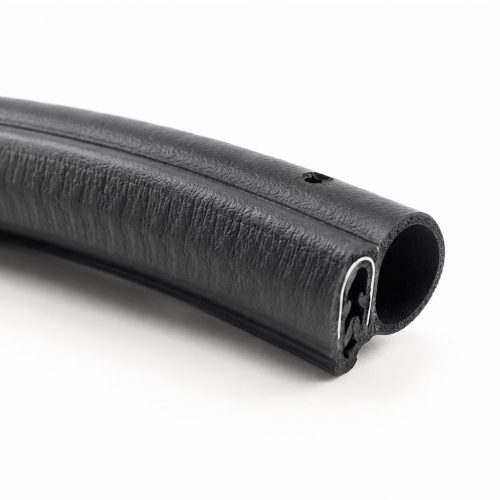
Looking for reliable rubber profiles in South Africa? This category includes practical profile solutions for sealing, edging and finishing across automotive, marine, DIY and industrial applications. Some profiles are designed mainly to protect exposed edges, while others help create a tighter seal against water, dust and noise. If you need a simple solution for covering exposed panel edges, our Rubber Edge Trim range is a good place to start.
Rubber Profile Characteristics
• Designed for sealing, edging and finishing applications
• Suitable for doors, boots, hatches, enclosures and access panels
• Helps reduce water, dust, draughts and noise ingress
• Includes both edge trim and bulb seal profile options
• Many profiles use a push-on clamping design for a secure fit
• Selected products include a steel reinforced grip section
• Bulb seals combine a firm grip area with a softer sealing section
• Available in different clamping ranges and dimensions
• Current range is mainly available in black
• Additional profile types and colours will be added over time
• Suitable for doors, boots, hatches, enclosures and access panels
• Helps reduce water, dust, draughts and noise ingress
• Includes both edge trim and bulb seal profile options
• Many profiles use a push-on clamping design for a secure fit
• Selected products include a steel reinforced grip section
• Bulb seals combine a firm grip area with a softer sealing section
• Available in different clamping ranges and dimensions
• Current range is mainly available in black
• Additional profile types and colours will be added over time
Rubber Profile Applications
Rubber profiles are used in many environments where exposed edges need protection or a closing panel needs a better seal. In automotive and transport applications, they are often fitted around doors, boots, hatches and storage compartments. In DIY, workshop and industrial settings, they are also used on access panels, machinery covers and electrical enclosures. Where the closing surface presses against the side of the profile, a Side Bulb Rubber Seal is often the most suitable option.
Common applications include:
• car doors and boot openings
• canopies and trailer compartments
• camper and caravan hatches
• marine lids and access panels
• machinery covers
• electrical enclosures
• metal, plastic and fibreglass edge protection
• general sealing for DIY and workshop use
• canopies and trailer compartments
• camper and caravan hatches
• marine lids and access panels
• machinery covers
• electrical enclosures
• metal, plastic and fibreglass edge protection
• general sealing for DIY and workshop use
FAQ About Rubber Profiles
Q1: What are rubber profiles used for?
Rubber profiles are used for sealing gaps, protecting exposed edges and improving the fit between closing surfaces. They are commonly used on doors, boots, hatches, access panels and enclosures where protection against dust, water, vibration or noise is needed.
Q2: What is the difference between rubber edge trim and a bulb seal?
Rubber edge trim is mainly used to cover and protect a sharp or exposed edge. A bulb seal includes a soft sealing section that compresses when a door, hatch or lid closes, creating a tighter seal.
Q3: Are rubber profiles only used in vehicles?
No. Although many profiles are used for automotive and trailer applications, they are also suitable for marine, workshop, DIY and industrial projects.
Q4: What is a side bulb rubber seal?
A side bulb rubber seal has the sealing bulb positioned to the side of the clamping section. This makes it suitable where the closing surface presses sideways against the seal.
Q5: What is a top bulb rubber seal?
A Top Bulb Rubber Seal has the sealing bulb on top of the clamping section. It is often used around lids, hatches and boot openings where the surface closes downward onto the profile.
Q6: Do you also stock products used as door seals or boot seals?
Yes. Some products in this category are commonly used as door seals with lip or as universal boot seal profiles, even though they are structurally grouped under rubber profiles.