
December 15, 2025
Choosing the Right Tatami Mats for Martial Arts Training in South Africa
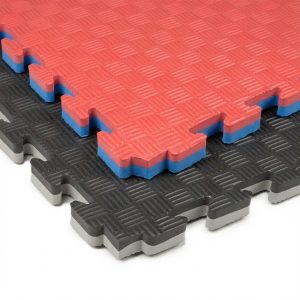 Tatami mats form the foundation of martial arts training spaces across South Africa. From school halls in Gauteng to community dojos in the Western Cape, the right flooring directly affects safety, confidence and training quality. However, choosing the correct tatami mats often raises questions about thickness, material and suitability for different disciplines.
In this guide, we explain how tatami mats are used in South Africa, why thickness matters, and how to choose the right solution for your dojo, club or gym.
A South African Training Story: From Community Hall to Professional Dojo
In many parts of South Africa, martial arts clubs start in shared spaces. A taekwondo club might train in a school hall during the week. A judo group might share a community centre on weekends. The floor is often hard, uneven or slippery.
One such club in Gauteng experienced this first-hand. Training attendance was good, but beginners struggled with breakfalls. Coaches noticed hesitation during throws, especially among younger students. Confidence dropped, not because of lack of skill, but because the floor did not support safe training.
After installing proper tatami mats with sufficient grip and impact absorption, training sessions changed noticeably. Students moved more freely. Throws felt controlled. Parents felt more comfortable watching children train. The same hall suddenly functioned like a dedicated dojo.
This situation is common across South Africa. Tatami mats are not a luxury. They are a practical requirement for safe and consistent martial arts training.
What Are Tatami Mats?
Tatami mats are modular flooring tiles designed for martial arts training environments. Modern tatami mats are typically made from EVA foam and feature a textured anti-slip surface. This combination provides grip during movement and cushioning during falls.
Because many South African clubs need flexible setups, tatami mats are often installed using an interlocking system. This allows quick installation, easy storage and simple expansion. Explore our range of tatami mats for martial arts flooring to see suitable options for different training spaces.
Why EVA Foam Tatami Mats Work Well in South Africa
South African training environments vary widely. Some dojos operate in hot climates. Others deal with dust, humidity or shared facilities. EVA foam performs well under these conditions because it is lightweight, moisture-resistant and easy to clean.
In addition, EVA foam tatami mats offer durability without excessive weight, which is important for clubs that regularly set up and pack away floors. For material-focused options, view our EVA foam tatami mats designed as reversible interlocking tiles.
Tatami Mat Thickness Explained: 25mm vs 40mm
Choosing the right thickness is one of the most important decisions when selecting tatami mats. In South Africa, where clubs often train mixed age groups and skill levels, this choice directly affects safety.
25mm Tatami Mats for Stand-Up Martial Arts
25mm tatami mats provide a firm and stable surface with controlled cushioning. This makes them suitable for disciplines where speed, footwork and balance are more important than repeated falls.
They are commonly used for:
- Taekwondo clubs training in school halls
- Karate dojos focusing on striking techniques
- Martial arts classes with limited ground work
For these applications, 25mm tatami mats for sports flooring provide grip and stability without feeling too soft.
40mm Tatami Mats for High-Impact Training
40mm tatami mats offer increased shock absorption and joint protection. They are designed for disciplines where throws, takedowns and ground work are part of every session.
They are widely used in South Africa for:
- Judo clubs training youth and adult groups
- Brazilian Jiu-Jitsu academies
- Wrestling and grappling programmes
If training involves regular falls or competitive practice, 40mm tatami mats for sports flooring help reduce injury risk and improve confidence on the mat.
Sports Flooring vs EVA Foam Tiles: Understanding Category Differences
Tatami mats may appear under different product categories on a website, but the mats themselves remain the same. The difference lies in how the information is presented.
Sports flooring focuses on training performance, safety and discipline-specific use. EVA foam tiles focus more on material properties, tile structure and installation flexibility.
For training-focused setups, browse tatami mats under sports and gym flooring. For material comparisons and modular tile options, explore tatami mats under EVA foam tiles.
Reversible Colours and Zoning in South African Dojos
Many tatami mats feature reversible dual-colour designs. This allows South African clubs to create training zones, safety borders or competition layouts within shared spaces.
Colour combinations such as red and blue, green and orange, or black and grey help define areas clearly, even in multipurpose halls.
Installation Flexibility for Local Training Spaces
Because many South African clubs do not have permanent facilities, easy installation is essential. Tatami mats install without adhesive and can be packed away after training.
Individual tiles can be replaced if damaged, which makes this flooring solution cost-effective for long-term use.
Choosing the Right Tatami Mats for Your Club or Gym
When selecting tatami mats in South Africa, consider:
- The martial art being practised
- Training intensity and frequency
- Age groups and experience levels
- Whether the floor is permanent or temporary
By matching mat thickness and surface to your training needs, you create a safer, more professional environment that supports long-term growth.
Browse our complete selection of tatami mats to find the right flooring solution for your dojo, club or training facility.